Wondering whether you should renovate your current Pinecrest home or move up to a different one? You are not alone. In a market where home values are high and options can vary widely from one part of Pinecrest to another, this decision has real lifestyle and financial weight. The good news is that with the right framework, you can compare both paths more clearly and move forward with confidence. Let’s dive in.
Why this decision feels different in Pinecrest
Pinecrest is not a one-size-fits-all market. Recent housing data points to a luxury market with high price points, longer decision windows, and meaningful variation in home values depending on the area and property type.
Redfin reported a median sale price of $2.17 million in March 2026, while Zillow reported typical home values around $2.20 million. Zillow also showed 136 homes for sale and 91 days to pending, and Realtor.com reported 188 homes for sale with a median listing price of $3.98 million. While those figures are not directly interchangeable, together they suggest a market where you may have more time to evaluate your options than in a fast-paced bidding war environment.
That matters because moving up within Pinecrest does not always mean a small jump. Zillow’s neighborhood data ranged from about $1.8 million in King’s Bay to more than $12.3 million in Old Cutler Bay. If you are thinking about a new home in a different part of the village, the budget change can be substantial even if you stay in the same community.
When renovating may make more sense
If you already love your location, lot, and general layout, renovation may be the more practical path. This is often true when your home mainly needs updated finishes, better function, or selective added space rather than a complete transformation.
National Houzz data supports that mindset. In 2024, the median renovation spend per household was $20,000, while the 90th percentile reached $140,000. Houzz also found that 61% of renovating homeowners expected to stay in their home for 11 years or more, which shows how often renovation is tied to long-term planning.
Best-fit renovation projects
In Pinecrest, renovation often makes the most sense when your goals fall into a moderate scope, such as:
- Updating a kitchen
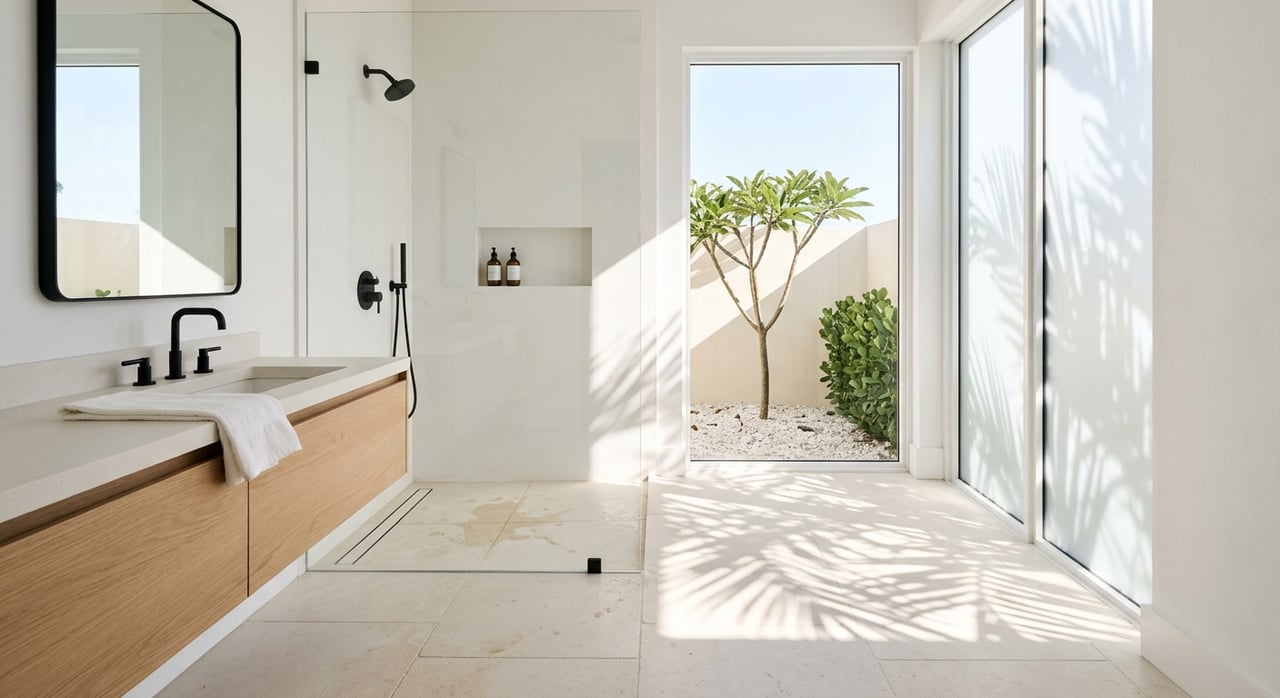
- Refreshing a primary bathroom
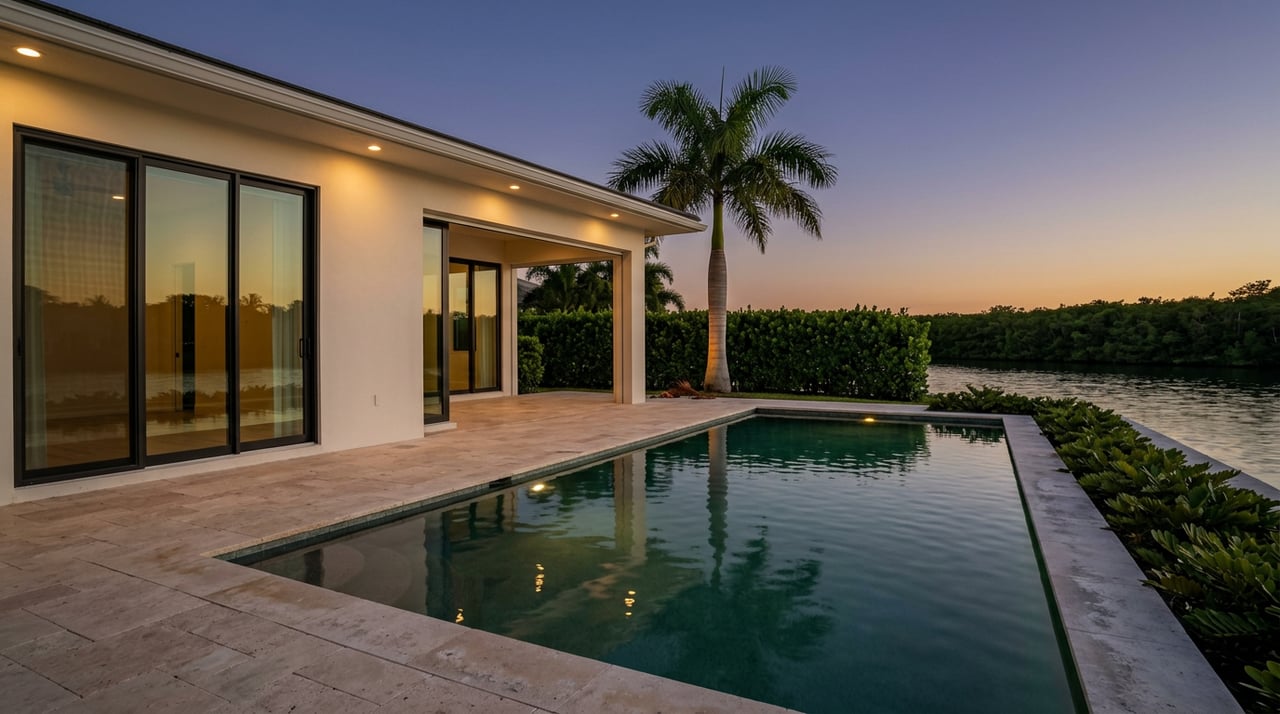
- Improving outdoor living areas
- Reworking select interior spaces
- Adding function without a major structural overhaul
Houzz reported that kitchens and bathrooms were among the most popular renovation projects in 2024 at 24% each. Median spend was $22,000 for kitchens and $13,000 for primary bathrooms. Outdoor improvements also remained common, including landscaping beds, patios or terraces, fences, lighting, security, and irrigation.
For many Pinecrest homeowners, these are the upgrades that improve daily life without forcing a full move. If your current home already checks the biggest boxes, a targeted renovation can be a more efficient way to get what you want.
Local permit rules matter
In Pinecrest, renovation is not just about design choices. It is also about compliance. The Village of Pinecrest states that most remodeling or construction that enlarges, alters, repairs, moves, demolishes, or replaces electrical, gas, plumbing, or mechanical systems requires permits.
That can affect timeline, cost, and feasibility. If prior work on the home was done without permits, the village notes that it may be subject to removal or other costly remedies. Before you commit to a renovation, it is smart to confirm the property’s permit history.
Floodplain and elevation issues can change the math
This is one of the biggest reasons a renovation plan can become more expensive than expected. Miami-Dade requires elevation certificates for new construction and for projects involving substantial improvements.
The county’s 50% rule is especially important. If the cost of the work and repairs exceeds 50% of the structure’s market value, the home may need to be raised to current elevation standards. In practical terms, a renovation that looks manageable at first can become much more complex if it crosses that threshold.
When moving up may be the better choice
Sometimes renovation cannot solve the real issue. If your home no longer fits your space needs, floor plan preferences, or long-term goals, moving up within Pinecrest may be the cleaner solution.
This is especially true if you want features that are difficult or inefficient to create through remodeling. Think more square footage, a different lot setup, newer construction, or a floor plan that better matches how you live today.
Signs it may be time to move
Moving up may make more sense if:
- Your current layout no longer works
- You need meaningfully more space
- A renovation would trigger major permit or elevation issues
- The projected renovation budget is approaching the cost gap to a better-fit home
- You want a different home style or lot configuration that cannot be created easily
In Pinecrest, that last point is important. Because the market has wide price dispersion, there may be opportunities to move into a better-fitting home without entering an entirely different luxury tier, depending on where you are now and where you want to go.
Compare the true cost of each path
The decision is rarely just about contractor bids versus a purchase price. You need to look at the full financial picture.
Renovation costs to include
If you renovate, factor in:
- Construction costs
- Permit costs
- Design or planning fees
- Temporary living expenses if needed
- Financing costs if you borrow against equity
- Risk of scope changes during the project
Home-equity financing can help, but the loan structure matters. According to the CFPB, a HELOC is usually a variable-rate revolving line of credit, while a home equity loan is typically a fixed-rate lump sum second mortgage. A cash-out refinance can also fund repairs, but because your home secures the debt, it can increase financial risk if payments become difficult to manage.
Move-up costs to include
If you move, look beyond the list price. Your budget should also account for:
- Mortgage costs at current rates
- Closing costs
- Documentary stamp taxes and mortgage taxes
- Moving expenses
- Any overlap in carrying costs if you buy before selling
Freddie Mac reported the average 30-year fixed mortgage rate at 6.36% as of May 14, 2026. At Pinecrest price points, that rate environment can make a meaningful difference in monthly affordability when you compare a larger mortgage to a renovation loan or equity-based financing.
Florida tax costs also add friction to a move-up purchase. In Miami-Dade, deeds are taxed at 60 cents per $100 of consideration. The county surtax is 45 cents per $100, though it does not apply when the document transfers only a single-family dwelling. Mortgages are taxed at 35 cents per $100 of the secured amount. These are easy to overlook, but they should be part of your side-by-side comparison.
Do not forget homestead portability
If your current Pinecrest home is your Florida homestead, portability may help reduce the tax impact of moving. The Florida Department of Revenue says eligible homeowners may transfer all or part of their Save Our Homes assessment difference to a new Florida homestead.
The transferable benefit can be up to $500,000. To qualify, you generally need to file Form DR-501T with Form DR-501 by March 1 of the first year after moving, and the new homestead usually must be established within three years of January 1 of the year the old homestead was abandoned.
This is one of the most important planning items for move-up buyers in Florida. If you miss the timing, the cost difference can be significant.
Think about timing before you decide
In South Florida, project timing matters. NOAA says the Atlantic hurricane season runs from June 1 through November 30.
That does not mean you cannot renovate during those months, but exterior work, roofing, pool work, and larger additions are often easier to schedule outside peak storm season when possible. If your renovation depends heavily on exterior progress, timing can affect your comfort, schedule, and risk tolerance.
Timing matters on the move-up side too. Realtor.com notes that selling first can reduce double-mortgage risk and carrying costs, while buying first can offer more flexibility but may require bridge financing or contingent terms. In Pinecrest, where both homes are often high-value assets, this choice deserves careful planning.
A simple decision framework
If you are torn, use this quick framework.
Renovate if these are true
- You like your current location and lot
- Your home mainly needs cosmetic or moderate-scope updates
- The project is unlikely to trigger major floodplain or 50% rule issues
- You expect to stay long enough to enjoy the improvements
Move up if these are true
- Your home no longer fits your layout or space needs
- The renovation would be extensive, disruptive, or financially inefficient
- Permit, flood-zone, or elevation issues create major hurdles
- A different Pinecrest home would solve the problem more directly
Key checks before you choose
Before you commit to either path, verify a few details on your specific property and budget.
- Confirm the flood zone designation
- Check whether an elevation certificate already exists
- Review permit history for prior additions or system replacements
- Evaluate homestead portability eligibility and deadlines
- Compare financing structures for any HELOC, home equity loan, or cash-out refinance
These details can change the outcome fast. A home that looks renovation-friendly on paper may not be the easiest candidate once you review permits, flood-zone rules, and financing costs.
The best answer is the one that fits your next chapter
In Pinecrest, renovating often makes sense when your home already has the right location and bones, and the needed changes are mostly about comfort, style, or moderate functional upgrades. Moving up often makes more sense when the real problem is size, layout, or a project scope that starts pushing into heavy compliance, floodplain, or budget territory.
The right choice is not just about today’s numbers. It is about how you want to live, what you want your equity to do for you, and which path gives you the clearest return in both lifestyle and long-term value. If you want help weighing renovation against a move-up purchase in Pinecrest, Surelis Yanes can help you compare the options with local market insight and a smooth, concierge-level approach.
FAQs
Should I renovate or buy another home in Pinecrest if I like my current location?
- If you like your location and lot, renovation is often the better fit when the work is mainly cosmetic or moderate in scope.
What renovation issues matter most for Pinecrest homes?
- Permit requirements, flood-zone status, elevation certificates, and Miami-Dade’s 50% substantial-improvement rule can all affect cost and feasibility.
What costs should I compare when moving up within Pinecrest?
- You should compare mortgage costs, closing costs, deed and mortgage taxes, moving expenses, and any overlap in carrying costs if you buy before selling.
How does Florida homestead portability help Pinecrest move-up buyers?
- Eligible homeowners may transfer all or part of their Save Our Homes assessment difference to a new Florida homestead, with a transferable benefit of up to $500,000 if deadlines are met.
Is Pinecrest a fast market where I need to decide immediately?
- Recent data suggests Pinecrest remains high-priced but is not a frantic market, which may give you more room to evaluate whether renovating or moving up is the better choice.